Sign In

  • Forgot your password?
  • Need a new account?

Register


XUV Spectrometers (1-200nm) | SIMTRUM Photonics Store

XUV Spectrometers (1-200nm)

We can offer a variety of XUV/VUV spectrometers. Among them, the wavelength range of the XUV spectrometer covers 1-200nm. It adopts a no-slit design and features high light collection efficiency and system efficiency (efficiency can be increased by 20 times). The integrated beam profile analyzer makes it a complete characterization tool for XUV sources. The wavelength range of the VUV spectrometer covers 40-300nm. It adopts an aberration-corrected grating , which increases the grating utilization rate to 43%. Meanwhile, its closed-loop grating positioning provides extremely high wavelength accuracy. Switching between the spectrometer and the monochromator can be achieved through inlet and outlet switching .


The modular design matches various experimental geometries and configurations. It features an integrated slit holder and filter insertion unit, as well as an electric grating positioning, which can be selected according to your specific experimental scenario. In addition, you can also choose to match various detectors, including XUV CCDS for high resolution and dynamic range, MCP/CMOS type detectors for wide wavelength coverage and gated/enhanced detection, and PMT detectors for scanning applications. Please contact us for further discussion of your requirements.The available models are as follows in the table.

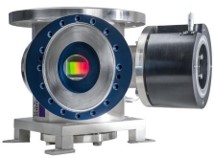
maxLight spectrometer

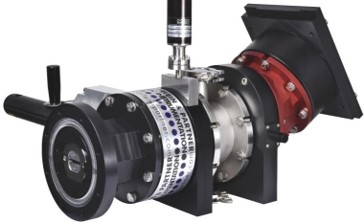
highLight spectrometer

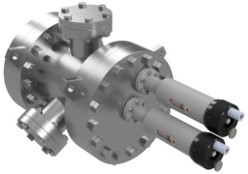
easyLight spectrometer


Brochures English: maxLIGHT pro | easyLIGHT | beamLIGHT | nanoLIGHT | highLIGHT
产品册 中文: 
maxLIGHT pro | easyLIGHT | beamLIGHT | nanoLIGHT | highLIGHT

Model Maxlight XUV Highlight XUV Easylight XUV Maxlight VUV Easylight VUV Easylight NA VUV
Wavelength Range 5 - 80nm 5 - 100nm 30 - 250nm 40- 200nm 80- 300nm 120- 200nm
Dispersion 0.5 - 1.3nm/mm 0.2 - 0.7 nm/mm ~2.0 nm/mm 0.9 - 1.6 nm/mm ~2.5 nm/mm ~11 nm/mm
Resolution <0.028nm at 40nm <0.02 nm at 60nm <0.1 nm <0.05 nm at 120nm <0.1 nm <0.5 nm
Topological structure Aberration-corrected flat-field spectrometer
Distance of light source Adjustable /
Detector CCD or MCP/CMOS Cooling MCP/CMOS
Vacuum condition <10⁻⁶mbar (UHV Available)
Whether to support monochromator mode No No Yes No Yes Yes
Entrance slit Optional Optional Optional 0~4 mm
Continuously adjustable
0~3 mm Continuously adjustable
Grating position Electric closed loop 1500 L/mm,Electric closed loop
Filter insertion unit Optional
Control interface USB / Ethernet
Software Windows UI / Labview/VB/C/C++ SDK


This series of spectrometers mainly consists of two structures. The functional analysis of each component in the system is as follows:

Structure diagram of maxLight spectrometer

Structure diagram of easyLight spectrometer


Why must vacuum be strictly controlled when using a UV spectrometer?

  • Avoid atmospheric absorption. Photons within the UV range (1-100nm) have extremely high energy. Oxygen (O₂) and water vapor (H₂O) in the air will strongly absorb them. Especially when the wavelength is less than 200nm, the attenuation of the light signal in the air can reach over 90%, and the signal cannot reach the detector.
  • Avoid stray light interference. Gas molecules in the atmosphere scatter V and UV light, generating stray light, which causes spectral baseline drift and peak blurring, making it impossible to obtain accurate spectral information of the sample.


  1. What are the advantages of aberration-corrected gratings?
  • Eliminate optical aberrations and enhance the purity of spectral lines. Ordinary gratings have inherent aberrations such as spherical aberration and coma aberration, which cause spectral lines of different wavelengths to shift, tailing or become blurred. Aberration-corrected gratings, through the design of grating grooves, can directly counteract these aberrations, making the spectral lines sharper and the peak shapes more symmetrical, effectively reducing the overlapping interference of adjacent spectral lines, and are particularly suitable for narrow peak analysis in the VUV band.
  • Flat-field focusing design, perfectly compatible with planar detectors. The diffraction focusing surface of a common grating is a curved surface, while the detectors of spectrometers (such as CCD and MCP) are all flat surfaces. Additional corrective lenses need to be added to match them (VUV band lenses are prone to absorbing light and consuming signals). Aberration-corrected gratings directly focus all wavelengths of light onto the same plane without the need for additional optical components, simplifying the system while reducing the loss of optical signals.
  • High resolution and high light utilization are both taken into account. Ordinary gratings need to reduce the incident slit to improve resolution, which leads to a significant decrease in light intensity (sacrificing sensitivity). Aberration-corrected gratings can collect the incident light signal to the greatest extent while ensuring high resolution without overly reducing the slit. This is also one of the core reasons why the light intensity is 20 times higher than that of traditional instruments.
  • Stable wide-band performance and is suitable for vacuum environments. In a wide wavelength range (such as the 1-100nm VUV band), ordinary gratings may experience a decrease in resolution and aberration reproduction at some wavelengths. Aberration-corrected gratings maintain consistent imaging quality throughout the entire working band, and have a more stable mechanical structure. They are resistant to VUV irradiation, have no outgassing, and are suitable for long-term operation in vacuum environments, reducing the frequency of instrument calibration.


  1. How is the positioning function of the electric closed-loop grating realized?

The grating positioning unit contains three electric positioners, which can operate the grating in all relevant directions: setting the incident Angle of the grating by rotation, centering the XUV beam on the grating through linear motion perpendicular to the incident beam, and optimizing the imaging on the detector by moving along the direction of XUV propagation. It is also equipped with a position sensor with an absolute reference position. Before starting the alignment program, move all the motors to the reference position. After reaching the final position during the alignment process, the motor position is recorded. Even if the reference of the positioning system is lost, the grating can still be brought back to that position.


  1. What is the function of adding a filter between the inlet and the slit for the maxLight spectrometer?

Filters are mainly used for spectral selective filtering, stray light suppression and detector protection, etc.

  • Eliminate higher-order diffraction. When a grating disperses light, higher-order diffraction (such as the second and third order spectra) occurs, causing light of different wavelengths to overlap. For instance, the first-order diffracted light at 100nm will coincide with the second-order diffracted light at 50nm on the detector, causing spectral distortion. Filters eliminate high-order diffraction interference by selectively absorbing or reflecting specific wavelengths.
  • Suppress the influence of stray light. Block the possible existence of small amounts of visible light/near-infrared leakage. These stray lights will reduce the signal-to-noise ratio of the detector. The filter can completely block visible and infrared light, allowing only VUV light to pass through.
  • Detector protection. Filters can reduce the interference of non-target wavelengths and improve signal purity. Prevent visible light and near-infrared light signals from damaging the detector.


  1. What is the function of adding a Class 0 light baffle between the grating chamber and the detector for the maxLight spectrometer?

The core function is to block the undispersed zero-order direct light to prevent it from interfering with the target spectral signal and damaging the detector.

  • Eliminate spectral baseline interference. Zero-order light is the direct light of the n=0 order in grating diffraction (not separated by wavelength), with concentrated energy and covering the entire wavelength band. If it reaches the detector, it will significantly raise the spectral baseline, causing the target VUV spectral lines (such as the absorption peak and emission line of the sample) to be masked. The baffle can completely block the zero-order light, making the baseline more stable and the weak signal spectral lines (such as the absorption peaks of low-concentration samples) clearly visible.
  • Protect the detector. The zero-order light energy density of VUV light sources (such as synchrotron radiation and plasma light sources) is extremely high, while the MCP/CMOS and CCD detectors that come standard with maxLight are highly sensitive to strong light. Long-term exposure can lead to detector saturation, increased dark current, and even cause aging of the MCP channel and burning of CMOS pixels. The baffle can directly block direct strong light, extend the service life of the detector, and reduce maintenance costs.
  • Suppress stray light. If zero-order light is not blocked, it will be reflected on the vacuum chamber and the surface of optical components, forming stray light and superimposing it with the target light after spectral separation, resulting in spectral peak shape distortion and a decrease in signal-to-noise ratio.


  1. What is the role of the internal integrated beam profile analyzer for the maxLight spectrometer?

The slit-free design of maxLight has extremely high requirements for beam collimation. The beam profilometer can detect the beam divergence Angle in real time to ensure that the incident light enters the spectrometer in the form of parallel light. At the same time, it can monitor the size of the light spot in real time to ensure that it fully covers the effective area of the detector, avoiding edge signal overflow due to an overly large light spot or light energy loss due to an overly small one. For instance, when switching gratings of different wavelength ranges, the beam profilometer can automatically adjust the optical path to make the spot size adapt to the new dispersion characteristics. In addition, the slit-free design may introduce more stray light. The beam profilometer can identify and mark the stray light region. Combined with zero-order light baffles and spectral filters, it can achieve multi-level stray light suppression.


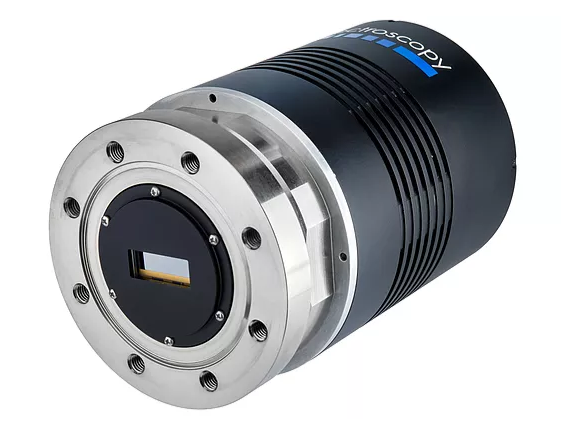
We can provide FSI/BSI CCD detectors. This series of detectors is specially designed for XUV/VUV spectroscopy, featuring high quantum efficiency in the ultraviolet (VUV) spectral range, excellent performance in low-light environments, and can also offer high resolution and a large dynamic range. For most vacuum ultraviolet (VUV)/extreme ultraviolet (XUV) applications, CCD detectors are an excellent choice.

In the maxCAM camera, the BSI sensor from e2v Company is adopted, with a quantum efficiency as high as 95%. Meanwhile, low-noise electronic components and a cooling temperature 80°C lower than the ambient temperature ensure an extremely low dark count. The quantum efficiency of the easyCAM camera in the spectral range of 100-300nm is as high as 40%.

Both of these cameras offer plug-and-play connection functionality via USB and Ethernet. Powerful software and software development kits applicable to Labview, C/C++, Visual Basic and Matlab enable comprehensive control of camera functions.

Maxcam

Easycam


Model Maxcam Easycam
Sensor BSI CCD from e2v FSI CCD from e2v
Pixel 1024 x 255 *1
Pixel size 26 x 26 um
Imaging area 26.7 x 6.7 mm
Rate 200/s full vertical bin,1000/s crop mode
Cooling -60° C
Well depth 500 000 e- active area,1 000000 e- register
Readout noise 12.5 e⁻ typ. at 500kHz
Dark current 0.004 e⁻/px/s at -60°C
Linearity >99%
Digital resolution 16bit
Interface flange DN63CF / 4.5″ or DN100CF / 6″
Vacuum compatibility 10⁻⁸mbar
Interface USB or Ethernet 10/100
SDK Matlab, Labview, Visual Basic, C/C++

Note: 1024*255 is the standard sensor specification. If you have any other specification requirements, please contact our sales department.


Perf. Curve

maxcam

easycam


In addition to the above-mentioned CCD type detectors, we can also provide detectors based on microchannel plates (MCP). For weak photon counting requiring long acquisition times (such as only a few signal photons per hour) or gated detection as low as the nanosecond level, the multi-channel version can be combined with a dark count rate of up to 1/s/cm² and a low-noise CMOS camera. Realize the measurement of signals.

Meanwhile, in pulse applications, the turn-on function of the microchannel plate may be helpful. A turn-on time as low as a few ns can isolate the signal from the previous or subsequent pulse.

Therefore, if you have any of the above two types of testing requirements, we recommend that you use an MCP/CMOS camera. For the specific specifications of this model of camera, please contact our sales staff for consultation.


In addition to being used as a spectrometer, the easyLight structure spectrometer can also be used as a monochromator through port switching. The specific operation method is as follows:


Port swap

This spectrometer adopts a symmetrical optical layout, and the inlet slit and the detector/outlet port can be quickly interchanged through a mechanical structure.

  • In the spectrometer mode, the light signal enters through the entrance slit, is dispersed by the aberration-corrected grating, and then the spectrum is directly collected by the detector (such as VUV CCD).
  • When switching to monochromator mode, the inlet slit becomes the outlet slit, and the grating focuses light of a specific wavelength to a fixed position, which is then output as monochromatic light through a photomultiplier tube (PMT).

Dynamic slit regulation

Both the inlet and outlet slits support electric continuous adjustment. The software can automatically configure the slit state according to the mode requirements.

  • Spectrometer mode: The inlet slit is fully open to maximize luminous flux, while the outlet slit is closed (or virtually infinitely wide);
  • Monochromator mode: The entrance slit limits the beam bandwidth (to enhance resolution), while the exit slit precisely positions the monochromatic light after diffraction. Combined with fine-tuning the grating Angle, a wavelength selection accuracy of less than 0.05nm is achieved.

Intelligent grating drive

The electric closed-loop positioning function of the grating is adopted, and the rotation Angle of the grating is controlled by software. In the spectrometer mode, the grating Angle is fixed, and the split light is projected onto the detector. In the monochromator mode, the grating calculates the Angle according to the preset wavelength and locks it, allowing light of a specific wavelength to be output through the exit slit.

Meanwhile, the software is equipped with a built-in pattern recognition algorithm that automatically determines the current working mode based on the detector type and slit state

  • When the array detector is connected and the exit slit is closed, force it into the spectrometer mode and enable spectral acquisition.
  • When the PMT is connected and the exit slit is open, it automatically switches to the monochromator mode, triggering the grating Angle calculation and wavelength calibration process.

Unlike visible light, the characterization of VUV/XUV must be studied in a vacuum, and the reflectivity of ordinary optical surfaces to VUV/XUV radiation is usually very low. Only by placing metal-plated optical devices in the optical path in a swept-incident manner can high reflectivity be achieved over a wide spectral range. To maximize the signal strength, the number of optical components in the system should be as few as possible. Ideally, only one optical element should be used.

Our spectrometer is designed to maximize the signal strength on the detector under all experimental conditions, enabling high-precision measurements even from weak radiation sources. To achieve this goal, this spectrometer uses only one optical component - a swept-incident flat field grating.


Figure 1: Comparison between direct imaging XUV spectrometer and traditional spectrometer with input slit. Direct imaging can maximize signal strength because the amount of light collected is only limited by the size of the grating, rather than the inlet slit.


Figure 2.1 shows the difference between the maxLIGHT extreme ultraviolet spectrometer in the direct imaging mode (top) and the conventional mode with an emission slit (bottom). In direct imaging mode, maxLIGHT can directly image the radiation source without a slit. Therefore, the collected amount of light is not limited by the width of the incident slit, but only by the size of the grating used. This enables the signal strength from the same light source to be increased by up to 20 times.

Direct imaging by light source

Compared with traditional spectrometer equipment, this system adopts an innovative design that does not require a narrow inlet aperture but directly images the harmonic source onto the detector. The utilization rate of incident light can reach over 80%. Compared with the traditional slit-type spectrometer, the collected signal strength can be 15 to 25 times stronger, thereby achieving the same improvement in the signal-to-noise ratio. In some experiments, the improvement of signal strength is a key step in achieving measurement.


Excellent luminous flux

The luminous flux collected by the spectrometer is a key factor affecting the system's sensitivity and also an important factor influencing imaging under weak light conditions. Traditional spectrometers use a slit at a fixed distance from the grating to generate a small light source, and then use the grating to disperse the light and ultimately image it onto the detector. This series of slit-free spectrometers can directly image the radiation source at any distance. In practice, compared with traditional spectrometers with a 100 μm entry slit, slit-free spectrometers can collect 15 to 25 times the amount of light without reducing spectral resolution.


Sturdy design

The compact design of this XUV spectrometer makes it insensitive to mechanical and environmental interferences (such as vibration, acoustics, etc.). There are no moving parts on the outside. The closed-loop motor with absolute position monitoring inside the instrument increases reliability and enables real-time monitoring of grating calibration. The spectrometer can be directly fixed to the vacuum chamber with bolts and can bear its own weight. This design also allows for installation in almost any direction.


Strong anti-misalignment ability

Due to its robust design, even minor external impacts will not affect the alignment of the instrument. If the instrument is subjected to severe impact while the motor control is enabled, the grating can be repositioned to the saved Settings through the grating positioning motor. In addition, due to the absence of an inlet slit, the instrument's sensitivity to misalignment is reduced. Under a typical slit design, a 500um offset in the dispersion direction of the beam at the slit entrance would result in a signal reduction of over 20%, while in our design, it is less than 10%.


Flat-field imaging technology

This spectrometer is based on a high-quality aberration-corrected planar grating. Compared with traditional gratings, they focus all wavelengths onto a plane rather than a circle. Place the detector on the focal plane of the grating to achieve a higher spectral resolution.


We can also provide a variety of spectrometer-related accessories for your selection, including filters, gratings, etc.

XUV filter

We can provide a variety of metal filters for spectral filtering. The transmittance of XUV filters is significantly higher than that of traditional filters. A thin coating can prevent the oxidation phenomenon of absorbing XUV on both surfaces. In addition, their higher mechanical rigidity makes their operation in the laboratory more convenient.


Selecting the appropriate XUV filter can focus on the spectral region of interest and block harmful stray light from laser wavelengths or low-order harmonics. For collinear pumping/detection experiments using beam splitters, segmented filters can be provided, and their dedicated support structure can achieve higher heat dissipation efficiency. Please contact us to discuss your choice of filters.


Schematic diagrams of the transmittance of different filter

The 3D surface image was measured using (a)XUV filter and (b) traditional peeled-type filter

Customized grating

The wavelength range covers X-rays - UV - VIS - IR, with a maximum line density of 3000 lines/mm. The holographic manufacturing process ensures extremely low stray light. For specific details, please consult our sales staff.


AFM image of an artificial laminar flow grating with a line density of 4000 lines /mm


Sample measurement demonstrating the improved signal strength. With the same signal strength, the resolution of maxLIGHT (solid lines) is significantly higher compared with a standard spectrometer (dotted lines). For equivalent resolution, standard technology would require a narrow slit setting and thus a significant degradation in signal strength.

The proprietary no-slit technology delivers high resolution and signal strength at the same time.

Sample measurement demonstrating the resolving power of maxLIGHT. The shown high harmonic spectrum is generated by the interaction of a single femtosecond laser pulse with a solid target and subsequent spectral filtering. The substructure inherent to the generation process is clearly resolved by the XUV spectrometer.

Plasma spectrum from a Xe gas puff target, measured with easyLIGHT XUV with LiF filter (pink), resp. LiF and Lyman-α filter (blue, multiplied by 10). Angle-resolved measurement of the reflectance of the VUV radiation off samples coated with Acktar Magic Black provided the coating's BRDF.


We are here for you!


Drop us an email at info@simtrum.com to get the Best Price today.   Want more technical information? Click Here for the professional Customized System/ Solutions.


Don't have time to search the products one by one? No worries. you can download the full range of SIMTRUM Product Line Cards.

Click it now.


Want to stay closer to the Market Dynamics and Technological Developments? Just take 5 seconds to Sign In as a member of SIMTRUM, we will bring you the most up-to-date news. 

(Sign in button on the top right of the screen).


Search Reset
Compare Model Drawings & Specs Availability Reference Price
(USD)
easyLIGHT XUV Spectrometers
Compact No-slit Flat-field XUV Spectrometer, Wavelength coverage 100nm - 300nm Resolution <0.1nm
4-6 Weeks Request for quote
highLIGHT XUV Spectrometers
High-resolution Flat-field XUV Spectrometer, Wavelength coverage 1nm - 60nm Flat field size 90mm
4-6 Weeks Request for quote
maxLIGHT pro XUV Spectrometers
No-slit Flat-field XUV Spectrometer and Beam Profiler, Wavelength coverage 1nm - 200nm Flat field size 35-70mm
4-6 Weeks Request for quote
nanoLIGHT XUV Spectrometers
Integrated XUV spectrometer and beam profiler
4-6 Weeks Request for quote
beamLIGHT XUV Spectrometers
HHG Source Systems
4-6 Weeks Request for quote
easyCAM FSI 1024x256
BSI CCD, Pixel 1024x256, Wavelength 50-300nm, Pixel size 26*26um
8-12 Weeks Request for quote
maxCAM BSI 1024x512
BSI CCD, Pixel 1024x512, Wavelength 1-100nm, Pixel size 26*26um
8-12 Weeks Request for quote
maxCAM BSI 1024x256
BSI CCD, Pixel 1024x256, Wavelength 1-100nm, Pixel size 26*26um
8-12 Weeks Request for quote

maxCAM BSI 1024x256 - Parameter

maxCAM BSI 1024x512 - Parameter

easyCAM FSI 1024x256 - Parameter

beamLIGHT XUV Spectrometers - Parameter

nanoLIGHT XUV Spectrometers - Parameter

maxLIGHT pro XUV Spectrometers - Parameter

highLIGHT XUV Spectrometers - Parameter

easyLIGHT XUV Spectrometers - Parameter

maxCAM BSI 1024x256 - Download

maxCAM BSI 1024x512 - Download

easyCAM FSI 1024x256 - Download

beamLIGHT XUV Spectrometers - Download

nanoLIGHT XUV Spectrometers - Download

maxLIGHT pro XUV Spectrometers - Download

highLIGHT XUV Spectrometers - Download

easyLIGHT XUV Spectrometers - Download

Accessories

Compare Model Drawings & Specs Availability Reference Price
(USD)